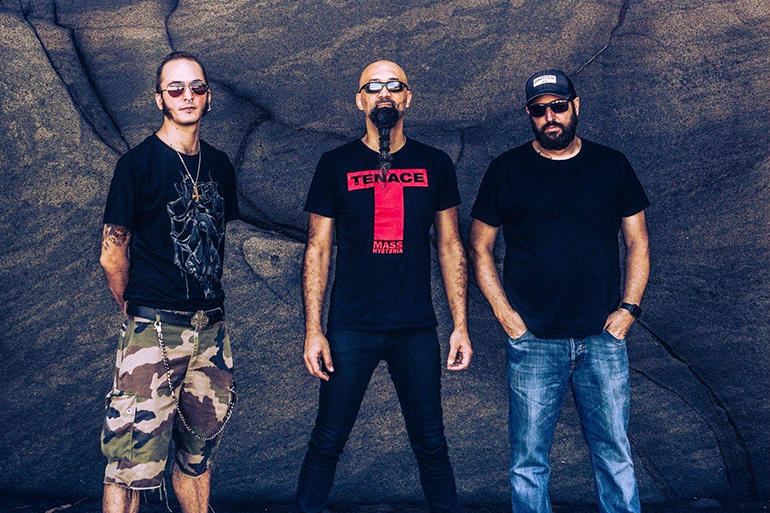
Lomor: “Our history, our geography, our people here have a lot to share about living together and respect”
After the raw intensity of “Panzram”, Reunion Island’s thrash metal trio Lomor return with a very different kind of statement. “Tantine Lo Clou”, their new single and official music video, reveals a more humorous and playful side of the band while maintaining the aggression and speed that define their sound. Taken from their upcoming album Sabouk Rouge, set for release in February 2026 via Rockshots Records, the track draws inspiration from a bizarre real-life moment during their 2023 French tour.
By Sandra Pinto
Hailing from an island better known for Maloya and Sega than for thrash metal, Lomor stand out as a powerful and uncompromising voice from the Indian Ocean. In this interview, vocalist and guitarist Eric reflects on growing up metal in Reunion Island, the influence of Creole culture on the band’s identity, the balance between humour and brutality, and the deeper historical and human themes explored on Sabouk Rouge. From their no-click, live-driven philosophy to their ambitions on the international metal scene, Lomor prove that extreme music can emerge from the most unexpected places.
Reunion Island is not usually associated with thrash metal. How has growing up there shaped Lomor’s sound and attitude?
Eric Castelnau (aka Babouk): I grew up in Reunion Island and music concerns were different in 80’s and 90’s than today. Moreover, as you were on an island lost in the Indian Ocean, access to music in general is very complicated, and worst of metal music, you know. Our island is indeed more known for Maloya or Sega music. Metal has always been a controversial music here, despite an active metal scene. I think these difficulties shaped the sound and attitude of almost all metal bands over the decades. We never give up, you know!
Do you feel that Creole culture plays a conscious role in your music, or is it something that naturally comes through?
Eric: It’s surely more natural for us to write Creole lyrics as our native language. It definitely shapes our songs. But Metal is more known as English-speaking music, so we do some English songs as well.
How important is it for you to represent Reunion Island on the international metal scene?
Eric: I think we have something to say in the International metal scene. Our history, our geography, our people here have a lot to share about living together and respect, as well as social issues, historical slavery and more modern ones.
“Tantine Lo Clou” is inspired by a bizarre real-life backstage moment during your 2023 French tour. At what point did you realise this story had to become a song?
Eric: Well … as soon as our Merch boy told us about it on the tour bus, right after the show… lol. We couldn’t stop laughing for miles. And the first thing we thought was a song for sure! But I must admit that this song came very late in the whole process of the album.
The track is humorous and energetic, yet still aggressive. Was it challenging to balance comedy with thrash intensity?
Eric: Yes, the lyrics are quite humorous. But we treat the music independently, in fact, as a thrash song. I think the Creole language was a good help to level up the intensity a bit.
Do you see humour as an essential part of Lomor’s identity, especially when surrounded by darker themes?
Eric: I would say no in general. There are others songs on the album with darker themes like religion, slavery or murderers. But yes a couple of song is still humorous ones, but the fondamentals of Lomor is not here, I think.
How does “Tantine Lo Clou” reflect the band’s personality compared to heavier tracks like “Panzram”?
Eric: We have a lot of fun in the band. Our discussions are often not very politically correct in fact … hum. But as I say, we try to bring other things in songs, lyrics or lives. When Gurvan told me about Carl Panzram, I was fascinated by the history of this bad guy and realised where all that hatred came from…
Your music blends old-school thrash, punk aggression and modern production. How do you keep that balance without losing authenticity?
Eric: Individually, we each bring our own influences and sensibilities during writing sessions or rehearsals. I think this is the key. I am a full slayeric madman. Gurvan brings his Black Metal and Grind influences. And Micha is our Led Zep vibes provider, you know. All of this creates Lomor and his authenticity, as you said, I think.
As a power trio, each instrument has a very clear presence. How do you work together to maintain such a tight and aggressive sound?
Eric: Practice, practice, and practice. This is our name lol :-). We are not the new Hendrix, or Lombardo, etc, you know. We just play what we can and we try to do it well. That’s why we practice regurlarly, rehearsal every week. Over the years, we really found our respective place in the sound. Micha spends countless hours to shape his sound… and still do even afters all thoses years, Damned!
Your approach feels very raw and instinctive. How much of your songwriting is planned, and how much comes from pure energy in the room?
Eric: The majority of riffs and structures come from rehearsals. We do it the old way: try riffs, change drum patterns or modify structure live during rehearsals. It’s a very, very slow process, but far more enjoyable. The computer comes late, as soon as structures are known to each other in rehearsal to record demos.
“Sabouk Rouge” explores heavy subjects like slavery, hatred and human cruelty. What motivated you to dive deeper into these themes?
Eric: Maybe to talk about our island. Slavery was a reality of the island for centuries. It’s still an important subject that matters here. By the way, at the end of the year, on Dec. 20th, we celebrate the end of slavery all around the island. Maloya was the music of the slaves, which was forbidden and severely punished at that time.
How does this album reflect your personal and musical evolution since “Perseverance of Sickness”?
Eric: “Perseverance” was written by two people, Gurvan and me. Micha came at the end of the process, just before the recording sessions (quite challenging for him at this time). But the new album is maybe the “real” first album of Lomor of this day because written by all of us. I think this one offers more moods and atmospheres throughout the songs. To be honest, we’re a little nervous about how people will receive the album.
You describe this as your most cohesive and dynamic work so far. In what way did your vision become clearer this time?
Eric: We tried new things for this album: slow tempo for “La Haine”, long timing song for “Sabouk Rouge” or “Vampire”. I don’t know if it’s a clearer vision but I feel (I hope :-)) that listeners won’t get bored listening to the album.
Do you see “Sabouk Rouge” as a political album, a historical one, or more of a human statement?
Eric: Ho no. This is no political stuff. A historical one, maybe, but with our own vision, simplified. I agree more with the Human statement, surely. Humanity is present in Lomor’s song, more often its bad sides.
You produced the album yourselves and worked again with Sébastien Camhi and Kai Stahlenberg. What did this familiar collaboration bring to the sound?
Eric: Sébastien made an amazing work on “Perseverance of Sickness”. We were blown away by the tone and energy he put in the tracks. Sébastien’s choice at this time was decisive for what followed. We have no regrets. He became a friend of ours. It was clear that the second album would have been done at Art Music Studio. No way. We paid for our plane tickets with our own money to be able to record with him. Kai put, one more time, the final touch to the global sound, which is huge!
Lomor strongly defend a no-click, live-driven philosophy. Why is this approach so important to you in today’s metal scene?
Eric: We are old way (did I mention it! ). More seriously, I have always played live with my old bands (Pest, Black Babouk) with no click. Ok, this was at the 80’s and early 2000. Gurvan neither. So we are not used to this kind of “tools”. It was natural for us to play with a “Rock’n’Roll” attitude “a la” Motherhead you know. But we are experimenting right now IEM systems which are quite practical and pleasant…
Your live performances are known for their intensity and chaos. How do songs like “Tantine Lo Clou” translate on stage?
Eric: Well, we didn’t already have the opportunity to play “Tantine Lo Clou” for now, as the release party of the album is scheduled on Feb. 21st at “La Cité des Arts” (Reunion Island). But I think the pit will enjoy it.
After touring mainland France and sharing stages with bands like Mass Hysteria, how did those experiences shape you as a band?
Eric: This was a huge experience for a young band like us. Mass was very welcoming and friendly. These are moments when you say to yourself: Ok, the road is long before such an organisation, a professional attitude, such a show! It was a big experience for us. We had the pleasure of opening for Akiavel, too, who has been on the island for a show in October 2022.
With “Sabouk Rouge” coming out in February 2026 via Rockshots Records, what can fans expect next from Lomor?
Eric: We have some weird projects on our bags. We are actively looking for dates for a French tour during summer 2026 with, maybe, a big surprise to announce ;-). But we are continuously searching for bookers and venues to play. This is a message, guys!
What would you like listeners outside Reunion Island to understand about Lomor when they hear your music for the first time?
Eric: What? Thrash in Reunion Island? Pure Old-School Thrash? Damned!!!
PRE ORDER – https://rockshots.eu/