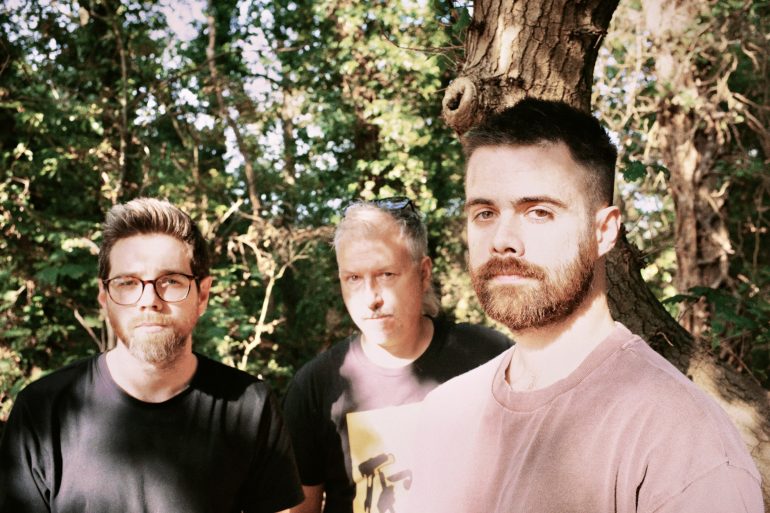
Takeda: “It’s better to get it out than let it bubble away inside you”
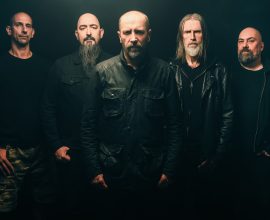
For Takeda, music has always been more than a creative outlet. It has been a way of processing experiences, confronting painful memories and finding a voice in the aftermath of profound personal change. Led by vocalist Josh, the British band has developed a distinctive sound that moves between folk traditions, fingerpicked acoustic guitar, grunge and crushing post-rock textures, refusing to settle into any conventional genre. Following the deeply autobiographical journey of their debut album, In Venus’ Train, Takeda are preparing their second full-length record, due in 2027. The first glimpse of this new chapter comes with “Lion’s Den”, a powerful and deeply personal track that explores anger, resentment, manipulation and betrayal. Featuring additional vocals from Raya Mhari-Iglesias of Birdwitch, the song marks a significant shift in Josh’s approach to songwriting, allowing emotions he had suppressed for years to finally come to the surface.
By Sandra Pinto
In this conversation, Josh takes us through the band’s origins, the musical influences behind Takeda’s unmistakable identity and the experiences that continue to shape their work. He also discusses the relationship between the two albums, the importance of artistic freedom and the cathartic power of turning pain into music. An honest conversation about finding strength in vulnerability, confronting the past and refusing to keep difficult feelings buried.
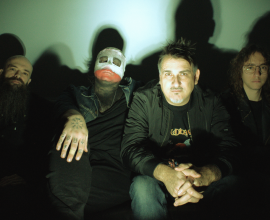
Takeda didn’t really form in 2022. Takeda has actually been my musical outlet, my baby, my project, since I was about 15 years old. It started when Dave and I formed a band with our mate Harry in high school, and it evolved from there. We played gigs together, playing our own stuff and covers of Biffy Clyro, Rage Against the Machine and Nirvana. When we left school, we went our separate ways. We didn’t really speak to each other again, besides a few messages here and there, until around 2021, 2022, when I messaged Dave and asked if he would want to join Takeda again and start playing gigs and writing new material. I also met Charlie through our producer Dave Pye, who I’ve worked with for many years. The three of us hit it off really well, and Takeda became a more muscular, powerful version of itself. More powerful than I was able to make it by myself. I think a lot of that identity and aesthetic comes from those years evolving in the background. I was lucky that the three of us hit it off so well, each bringing our own ideas to the table in a way that seems to complement Takeda. Dave and Charlie understood exactly what I was doing with Takeda, and they’ve enhanced it and brought so much to the table. For someone stepping into Takeda now as a fan or listener, it feels like a very highly evolved world full of lore and all sorts, which I really like.
Your music brings together British and American folk traditions, fingerpicked acoustic guitar, grunge, fuzz and heavy riffs. What draws you to combining sounds that might not traditionally be associated with each other?
I think this comes from a few places. I grew up with a real hunger for music, and when I look back over what I listened to growing up, it was so varied. It was probably inevitable that we were going to end up making music that blurred the lines a bit. My first love was outright pop music. When I was eight or nine years old, Five was my first cassette. Then I discovered my dad’s CD collection and fell in love with Bryan Adams, especially his acoustic set for MTV. I played that over and over, then discovered Neil Young and Nirvana, and fell heavily in love with rock music. I started listening to bands I discovered myself, such as Smashing Pumpkins, then discovered that second wave of post-rock: Sigur Rós, Godspeed, Explosions in the Sky. That was one part of my musical journey. On the other hand, my mum had taken me to guitar lessons since I was about six. It was classical guitar, and while I really struggled with enthusiasm for it, she persisted in taking me, and I did eventually fall in love with the acoustic guitar. That came through watching a documentary about the British folk revival. I was fascinated to see Martin Carthy, John Renbourn and Bert Jansch, and then I heard “Angie”. It absolutely captivated me, and I caught the name of the person who wrote it: Davy Graham.
I asked my mum to take me to the guitar store in Dereham town centre the next day. I spoke to John, a legend of the Dereham music scene, and asked him about “Angie”. He said, “Yeah, that’s Davy Graham.” He had the CD right there and gave it to me, along with a collection of Bert Jansch songs and Liege & Lief by Fairport Convention. That sent me down a rabbit hole that I’ve never come out of, or had any desire to: British folk revival, folk rock, and especially Davy Graham and the way he blurred the lines and combined genres. He saw through genres and just heard music. It’s something I’ve always wanted Takeda to do: hear music and translate it through the filter of our own experience without worrying too much about genre. Whether I’m playing live or on record, I don’t want it to feel as though we’re confined to anything other than expressing ourselves.
You’ve described Takeda’s sound as deliberately difficult to categorise. Is resisting genre classification important to the band, or is it simply the result of following each song wherever it takes you?
Similar to the last question, it’s not a conscious defiance. I don’t ever want to sound like somebody else. I want to maintain an original voice. I want to find something that’s uniquely ours and shout about it, then find something else that’s uniquely ours and shout about that as well.
The acoustic guitar is at the heart of your songwriting, yet the music can become incredibly heavy. How do you create that sense of weight and intensity without relying on a conventional electric-guitar approach?
The acoustic guitar was a journey for me. I consider myself mostly an acoustic, steel-string guitarist. I found it very difficult to write songs that rely heavily on the rhythmic feel of fingerpicking, and fingerpicked guitar riffs, then carry that across into a live environment with an electric guitar. It never worked. Lighter-gauge strings, a shorter scale length and neck. It never worked. My right hand has always been very heavy, so digging in on an electric guitar sounds awful. You bend the strings out of tune. I set my heart early on on writing with my acoustic guitar and then performing live on that same guitar. I found the right pickup and a set of pedals that I’ve honed over time to the point where I can just about control the feedback. The feedback itself has become a staple sound of the live set, and I love the way the acoustic guitar feels in my hands when you crank it loud. It feels like you’re hanging onto the mane of a wild horse. It’s a crucial part of Takeda’s live identity.
Bert Jansch is mentioned as an influence on your guitar playing. Which folk musicians, traditions or records have had the biggest impact on the way you approach guitar and songwriting?
Bert Jansch, definitely, but most of all Davy Graham. A forgotten hero of the British folk revival scene, and an originator of so many ideas we take for granted in rock music today. A massive influence on Jimi Hendrix, Jimmy Page and Paul Simon. His influence goes beyond what he gets credit for, and he’s far and away my favourite. The same with Richard Thompson. I think he’s a massively underrated songwriter. Outside Britain, he doesn’t get the attention he deserves. Even inside Britain, he’s massively underrated. All of his records, especially the Fairport Convention records he’s part of. He’s an amazing musician. Beyond that, I’ve always loved the folk songs of England, Scotland, Wales and Ireland. I spent a lot of my teenage years fascinated with Indian raga, learning, or trying my best to teach myself, raga form on the guitar. I got obsessed with that for a couple of years. That was a lot of fun. I’d say that’s probably the biggest influence on my guitar style. I think the unique part of my guitar sound comes from that Indian influence. Trying to play veena style guitar has always been a big goal of mine. I don’t think I’ve achieved it yet, but I’m trying, and I think it makes the sound unique.
You’ve said that when you can clearly identify another artist’s influence in a song, you often lose interest in it. How do you know when a song has moved beyond its influences and genuinely sounds like Takeda?
For the most part, that’s natural for us. It’s more a case of detecting when we’re imitating, and we’ve become quite good at that. As soon as one of us starts saying, “You know that song by X or Y?”, the song disintegrates, and we all know we’ve gone down a path here. Sometimes we can back it up and go back, but most of the time it means the song is more of a copycat than an original.
Your debut album, In Venus’ Train, documented the painful process of leaving a doomsday cult. Looking back now, what does that album represent to you?
That album represents a massive chapter in my life and a turning point with a lot of hurt for me and the people around me. It’s actually painful to listen to now, but I’m very glad we gave it the attention it deserves, and I’m really proud of it musically.
“Lion’s Den” seems to explore a different emotional stage. Rather than focusing on escape, it confronts anger, resentment, manipulation and betrayal. Did writing the song feel like opening a door that had previously remained closed?
In a way, yes. It’s the first time I’ve really let myself sing and write a song in anger. I’ve spent most of my life suppressing those feelings for various reasons. Having that song is a vehicle to let loose, let rip and say things I wanted to say in anger. That’s what “Lion’s Den” is to me.
You’ve described this as the first song you’ve written in anger. What changed for you when you allowed anger, rather than shame or reflection, to become the driving force behind the songwriting?
I think the song was written that way because internally I’d turned a corner. Instead of feeling ashamed of the things I’d done and the people I’d hurt, wondering whether I’d been selfish, I determined that I was confident in myself, that what I’d done was right for me, and that I’d done the best thing I could. I didn’t need to suppress my feelings. I could let them burst out and say what I thought about other people. It is a lot about giving myself permission, or realising I didn’t even need permission. If you feel a certain way about something, it’s best to express that feeling. Compressing and zipping those feelings up never really works.
The title itself is striking. What does the “lion’s den” represent within the story of the song?
Because of how I grew up and the group I was in, I use a lot of biblical imagery. That’s the vocabulary that comes to mind most easily. I trusted a lot of people to deal with me the right way and in love, people who had a lot of power and influence over my life. When it came to it, rather than helping or rescuing me, they did the opposite. They threw me away. Using the image of the lion’s den felt right. You pick up someone who’s trusting you, and instead of putting them somewhere safe, you throw them somewhere even worse. That image felt right.
Raya Mhari-Iglesias from Birdwitch contributes additional vocals to the track. What did Raya bring to the song, and how did her voice change its emotional character?
Raya’s voice is a massive part of the song. We’ve played with Birdwitch a few times, and they’re an amazing band. The whole group is able to summon this feeling that I really connected with. When it comes to expressing anger, I couldn’t think of anybody more qualified than Raya, so I had to ask her if she would sing on it. She said yes, and I’m very happy and chuffed that she was up for it. Her voice on the song adds the extra level of expression I was looking to get across.
David Pye produced “Lion’s Den”. What were you looking for from him when you went into the studio, and how did his approach shape the final recording?
David Pye produced it. He produces all our stuff. We approached this whole record with a different mindset. Previously, we’d mostly recorded live and then overdubbed on top. This time, I told Dave I wanted it to feel more highly produced. In my head, I wanted to make a pop album with all the rock textures and all those Takeda sounds and feelings, but approach it primarily as a pop record. Dave advised on the best way to do that, and we built the whole song up piece by piece rather than performing it live in the room together. I’m really happy with the way it came out. We deviated pretty far from the idea of it being a pop record, but it’s definitely got the feeling I wanted: this highly produced but still powerful, raw sound.
“Lion’s Den” is the first glimpse of Takeda’s second album, due in 2027. How different is the new album from In Venus’ Train, both musically and emotionally?
Initially, I was fairly sure this was going to feel very different to In Venus’ Train, but the more it’s developed, the more it feels like a sequel. It follows on hand in hand, passing the baton from In Venus’ Train to this. There’s a definite musical lineage between the two. This is heavier and darker, but it probably has more gentle moments than the previous record. It takes what Takeda did in In Venus’ Train and pushes it further in all directions. I wouldn’t say it feels outright better in every way, but it definitely feels bigger, more confident and more powerful.
After such a deeply personal debut, did you feel any pressure when writing the second album, knowing that people would inevitably compare it with the first?
I actually found it exciting to think that, after all these years of writing music, we finally have an audience who care and would be emotionally invested. Everybody’s been so supportive, and I’ve had so many nice messages about what that first album means to them. It’s really exciting to see how they’re going to feel about this next chapter. With all our songs, I’ve noticed that people seem able to imprint their own emotional experience onto the song, and I’ve worked on that as a songwriter. While I’m trying to be as personal as possible, I also try to leave space for the listener. On the second album, that’s probably even more the case. On one hand, it’s more personal than ever, but on the other, there’s more space for the listener. I’m excited to see where everybody takes it for themselves, how it makes them feel, and what imprint of themselves they can find in that record.
Does the new album continue the story that began with In Venus’ Train, or does it feel more like the beginning of a completely different chapter for Takeda?
It’s definitely a continuation. These two albums are autobiographical, and this album really does pick up where the last one left off.
There is something powerful about turning experiences that were once associated with shame into music. Has writing and performing these songs changed your relationship with your own past?
100%. It has helped me come to terms with a lot of it. A lot of lost time, and lost friends and family. It’s helped soak up regret. I don’t know if it’s a big battery of regret that I’ve buried away somewhere, or if it’s been dissipated into the universe. I’m not sure, but I know I don’t feel it anymore, and I’m certain that comes from the music.
Takeda’s music can move from delicate folk passages to crushing and abrasive moments. How important is that contrast to the way you communicate emotion?
I think there’s a lot of power in contrast. The longer you spend on one idea, the less powerful it becomes. Taking people on a journey that veers from one beautiful place to another, back again, then off to another new beautiful place is a more powerful, more memorable experience. It communicates emotion in a different way than staying seated in a single place and exploring the depth of that idea for a period of time. I don’t think one way is better than the other, but with Takeda, I find it very fun to explore the power of contrast.
As Takeda moves towards its second album, what do you still feel the band hasn’t explored yet?
There’s so much we’ve yet to do. We’ve already finished writing the third album, and we have a very clear idea of how we want it to sound and feel. Beyond that, I’m already having lots of ideas about new directions for Takeda. We’re always writing songs, and we’re very keen never to get stuck in a rut.
Finally, when listeners hear “Lion’s Den” for the first time, what do you hope they take from it, and what do you hope they leave behind?
I hope it gives them goosebumps, for whatever reason that might be. I hope it connects with some hidden pain in their life, something they’re angry about, somebody who betrayed them, treated them like shit or let them down, or circumstances in their life that they want to roar about. I hope they hear that in this song and take away a sense of strength. There’s nothing wrong with expressing and feeling that. It’s better to get it out than let it bubble away inside you. If someone’s hurt you, let them know. Don’t let their hurt rumble away inside you forever. Get it out. Let them feel it too.