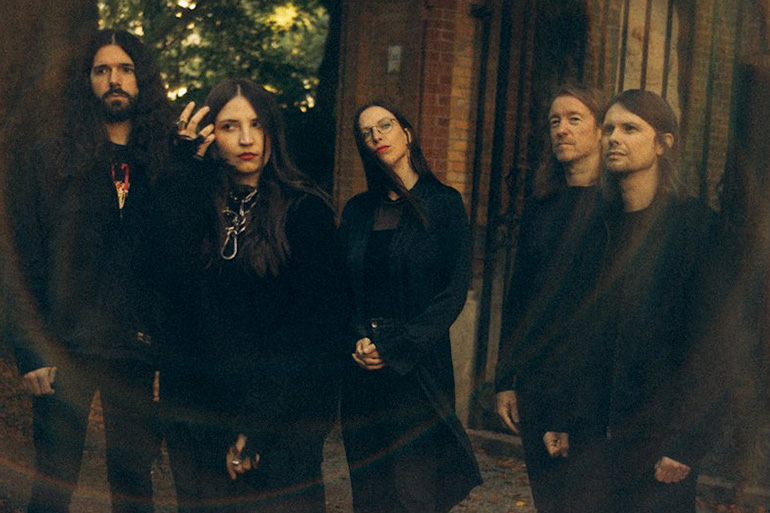
Predatory Void: “This EP feels like a foundation rather than a conclusion”
With Atoned in Metamorphosis, Predatory Void delivers an intense and introspective experience, blending haunting atmospheres with explosive bursts of metallic energy. More than just a release, the EP serves as a concentrated statement of the band’s current identity, showcasing a focus and clarity that set it apart from their previous work. Exploring themes of self-awareness, inner conflict, and uncomfortable truths, the music moves fluidly between tension and release, leaving a profound emotional impact.
By Sandra Pinto
In this interview, Lennart Bossu discusses the creative process behind the EP, the dynamic brought by new member Kris Auman, and how the band translates complex emotions into music that feels visceral and immediate.
Atoned in Metamorphosis is described as a concentrated statement of intent. How do you see this EP as a step forward from your previous releases, both musically and thematically?
I see this EP as a distillation of what Predatory Void is about right now. With *Seven Keys…* we were still exploring the full breadth of what the band could be, sometimes to the point of overcomplicating things. *Atoned in Metamorphosis* feels more focused and deliberate. We
stripped things back, kept the tracks shorter, and tried to make every movement count. Thematically, it’s also more direct. Instead of circling around ideas, the EP confronts them head-on: self-awareness, inner conflict, and the uncomfortable truths we tend to avoid. That focus makes it feel like a clear step forward rather than just an extension of what we’d done before.
The music on this EP moves between slow, haunting atmospheres and intense metallic eruptions. What role does contrast play in shaping the overall sound and feel of the record?
Contrast is essential to how we experience music, and some aspects of life, really. Heavy moments only hit as hard as they do because there’s restraint around them. The slow, haunted passages create space, tension, and anticipation, so when things finally erupt it feels earned rather than constant. We’re instinctively drawn to dynamic music, so this push-and-pull happens naturally when we write. Silence, repetition, and restraint heighten the impact of chaos. Without contrast, intensity becomes flat.
Can you explain the collaborative process in creating the EP, especially now with Kris Auman joining the band? How has her contribution shifted the band’s dynamic?
Most songs start with me bringing in a skeleton, riffs, structure, mood; but once it’s in the room it immediately becomes collective. Everyone reshapes it instinctively. Kris joining the band really reinforced that dynamic.
She comes from a very different musical background, and the way she approaches bass lines is often not what I’d expect, which is exactly what makes it interesting. She’s very deliberate, but also extremely open and enthusiastic, which adds a positive energy to the process. Her voice also opens up possibilities we’re only beginning to explore.
The textural interplay of the guitar and bass is one of the EP’s standout features. How did you approach the writing and arrangement of these elements to create the right tension and release in the tracks?
A big part of that is not filling every corner of the music. Thijs and I often work with skeletal motifs or textures rather than constant density, which leaves room for Kris to either anchor things underneath or cut straight through them. Her bass lines often function as a narrative element rather than just reinforcement. Sometimes they stabilize the chaos, other times they actively destabilize it. That tension between roles creates movement and makes the eventual release feel more impactful.
The production prioritizes the performance’s immediacy and dynamics. How did working with Gilles Demolder shape the final sound? What did he bring to the project that felt distinct?
Gilles has a very strong sense of atmosphere and instinctively understands when to step in and when to step back. The songs were already written, but the way they breathe on the EP is largely thanks to him. He was especially important during vocal tracking, helping shape not just individual takes but the emotional arc across each song. He preserved the rawness of the performances while still giving everything clarity and contrast. It feels immediate, but not careless. Silence is an essential element in your music, and transitions are key to the emotional payoff.
How do you decide when to hold back and when to let the music explode?
It’s mostly instinctive. We don’t sit around dissecting those decisions intellectually. We feel our way into them. Holding back creates tension, and tension is what we’re drawn to. A riff lands harder if there’s silence before it. A vocal cuts deeper if it isn’t buried under constant noise. Those pauses are as intentional as the loudest moments.
Atoned in Metamorphosis tackles themes of confronting uncomfortable truths, self-awareness, and emotional release. How do you approach translating such heavy, introspective themes into music that feels visceral and immediate?
We never try to write ‘about’ something in a literal sense. But when you spend enough time with sounds that feel abrasive, vulnerable, or unresolved, those themes naturally surface. The music becomes a physical way of engaging with things you’d normally avoid. It’s not about explaining or resolving those emotions, but about giving them form and presence, making them felt rather than understood intellectually.
Each track seems to represent a different layer of transformation, from chaos to clarity and fear to acceptance. What was the inspiration behind this structure, and how did it inform the songwriting process?
That idea emerged more organically than as a strict concept. As the EP came together, we noticed that each track leaned into a different emotional state or phase of transformation. The journey isn’t linear, and neither is the music. Songs move in waves between chaos and clarity, tension and release. That mirrors how confronting difficult things actually feels: fragmented, repetitive, and often unresolved.
This EP has been described as cathartic, wrestling with the unconscious and embracing the darker side of oneself. How did you channel this intense emotional energy into the music?
By not sanitizing it. We allowed discomfort to remain present in the music instead of smoothing it out. Playing this kind of music forces you to sit with whatever’s underneath, fear, obsession, anger, and acknowledge it without glorifying it. Turning that into sound feels cathartic
because it transforms something internal into something shared.
There’s a definite contrast between obsession and release in the EP’s narrative. What does “release” mean for the band, both in terms of your music and personal growth?
Release isn’t about resolution or closure. It’s more about recognition. Admitting that certain things exist, even the poisonous parts, already changes your relationship to them. Musically, release often comes through restraint as much as explosion. Personally, it’s about allowing space for honesty rather than perfection.
With this being your second release, how do you feel Predatory Void’s sound has evolved over time? What are the key elements that have remained consistent, and what has shifted?
What’s remained consistent is our focus on tension, atmosphere, and emotional honesty. What’s shifted is clarity and discipline.
We’ve become more comfortable leaving things out, repeating ideas, and trusting simplicity when it serves the song. The EP feels sharper and more direct, without losing the sense of unease that defines the band.
With such a dynamic and intense sound, how do you plan to translate Atoned in Metamorphosis into your live shows? Will the live experience differ from the recorded version, or is it about capturing the same energy?
Live, the goal is to preserve the same physical and emotional impact rather than recreate the recording exactly. The dynamics are still there, the silences, the eruptions, but the energy becomes more volatile. Some parts stretch, others become more confrontational. It’s about capturing the same tension in a more immediate, bodily way.
Kris’s bass lines are described as thick and nasty, often counterpointing the vocals. Can you talk about the interplay between her and Lina’s vocal dynamics? How does this partnership affect the final delivery of the songs?
There’s a natural dialogue between them. Kris’s bass often pushes against the emotional direction of Lina’s vocals rather than simply supporting them. That friction adds depth and unpredictability.
Vocally, we’re only scratching the surface of what that partnership can become, but even on this EP you can hear the beginnings of that interplay taking shape.
The EP’s energy is both confrontational and cathartic. How does the band balance the raw intensity with the emotional depth you aim to convey?
It comes down to intention. We’re not interested in force for its own sake. When things get extreme, it’s to sharpen the emotional point, not to overwhelm the listener. Intensity without depth feels empty. Depth without intensity feels dishonest. The balance lives somewhere in between.
What do you hope listeners will take away from Atoned in Metamorphosis? Is there a specific reaction you’re looking for, or is it more about personal engagement with the material?
If it provokes anything at all, I’m happy. Ideally, it gives listeners space to reflect on their own hidden corners, the parts they’d rather not look at. There’s no specific reaction we’re aiming for. Personal engagement is far more important than consensus.
Looking ahead, how do you see the band’s sound evolving on future projects? Are there any new elements or directions you’re excited to explore in the next chapter of Predatory Void?
This EP feels like a foundation rather than a conclusion. We tested new waters, and we like where they lead. There’s a lot more to explore in terms of vocal interplay, structure, and atmosphere. The next chapter will likely build on this focus, but push it into deeper and stranger territory.
Photo: Tetiana Malezhyk