


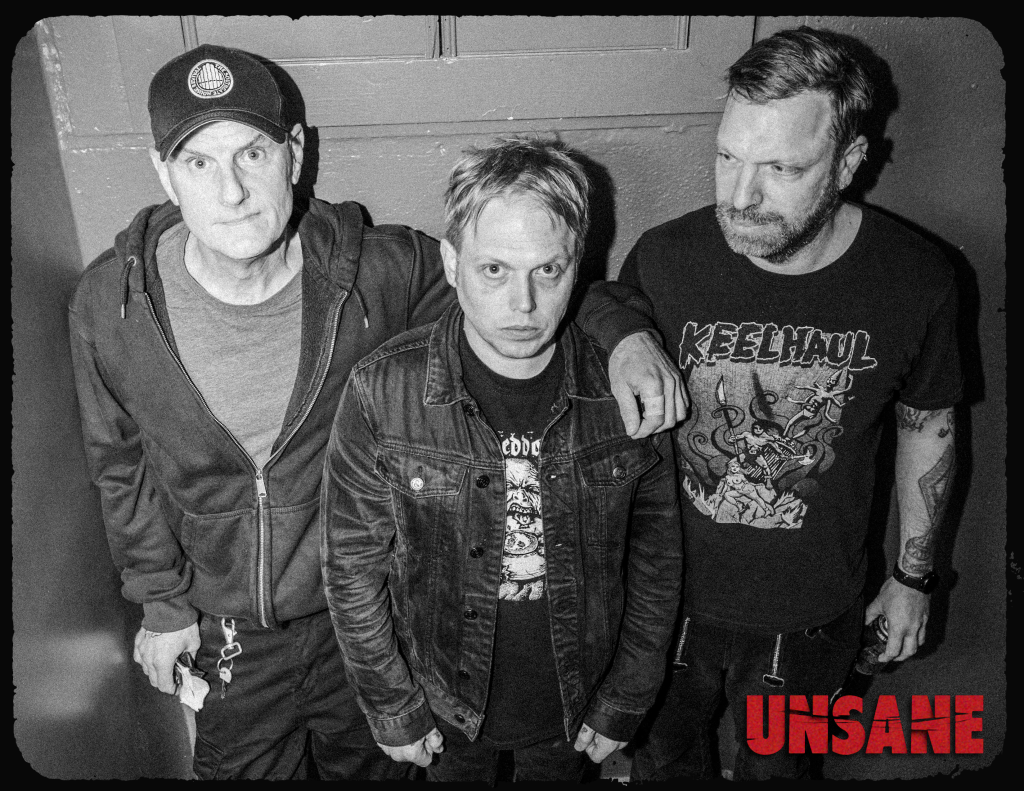
For the first time since its original 1998 release, Unsane’s Occupational Hazard is getting the deluxe treatment: remastered audio, previously unreleased AmRep sessions, and the inclusion of the rare vinyl-only track “No Soul.” Recognized for its abrasive guitars, relentless rhythms, and a raw intensity that blends punk, metal, and industrial influences, the album has long been a defining piece of the band’s catalog.
By Sandra Pinto
With the reissue comes a rare opportunity: the band will perform the record in its entirety for the first time, revisiting songs that captured a specific era of life marked by chaos, grit, and, in frontman Chris Spencer’s words, “urban cynicism tinged with an ounce of hope.” In this conversation, Spencer reflects on the creative process behind the original sessions, the impact of remastering and bonus material, and what it feels like to reconnect with this pivotal chapter of Unsane’s history decades later.
Occupational Hazard is being reissued for the first time with remastering and bonus AmRep sessions. How does it feel revisiting this pivotal chapter in Unsane’s history?
Now that it’s done, I think it’s long overdue. It’s awesome to revisit this record and having been rehearsing it for the upcoming tour, it’s really fun to play these songs live. We have never played the full record for an audience, so having this opportunity is amazing!
Looking back, what made the original 1998 sessions so creatively defining for the band?
I’m not sure if I would say that it’s defining for the band, but we were doing a ton of touring at the time, so we were extremely focused. we had the opportunity to play these songs live for a while before we recorded them, so that gave them something of an extra edge. We also had the opportunity to do a bit of preproduction at the Amrep Studios, which is included as a digital download on this re-issue.
What motivated the decision to include the previously unreleased demo sessions in this reissue?
As I said before, we had had the opportunity to play these songs live for a while before we even got to the Amrep studio, so they really sound done and have a raw edge that I like. I’m glad we got to include these as a digital download with the vinyl as they seem sort of key to the production of the record.
You tracked the album at Excello Studios with Billy Anderson and later mixed with David Sardy. How did each of these collaborators shape the final sound?
The original recording done with Billy Anderson at Excello was very raw, which we liked, but upon receiving the initial rough mixes, we thought it could use a bit more clarity. Billy was out in S.F. so we didn’t have the opportunity to be there for the mixing. That being the case, I asked my friend Dave Sardy if he could help us out. He had just done some work with Slayer and knew a really good studio in Midtown that we could use. When we started doing the mixes with Dave it sounded really amazing. Dave added something that had been missing from the original roughs. It really helped the entire record working with him in a good studio.
The original album is noted for abrasive guitars and relentless rhythms. Did remastering change or enhance that intensity in any way?
I think that at the time the record was made we were less conscious of what mastering could do. Having Andrew Schneider do it now really kind of kicked the whole thing up a notch. I definitely think it enhanced the intensity.
“No Soul” was previously a vinyl-only limited track. Why was it important to finally include it for this reissue?
Yeah, the song “No Soul” had come out on a 7” single done for Frank Kozik at Man’s Ruin records. That was the only format it ever been released as, so it seemed appropriate to include it on the record, being that it was from the same time period.
Occupational Hazard blends punk, metal, and industrial elements. How did you approach songwriting to balance these genres cohesively?
I don’t think that was really a conscious effort to blend any elements, we just did what came naturally at the time.
Looking at tracks like “Smells Like Rain” or “Sick,” do you notice new layers or meanings now that the songs have been revisited decades later?
Actually, listening to these now, and knowing what I was saying lyrically, really takes me back. I think the lyrics are very concise in their message and remind me of a certain time period of my life when things were pretty fucked up. It’s cool to play these songs and know that somehow my life has improved substantially since then.
Was there a central theme or emotional thread running through the original album that still resonates today?
Yes, I think that almost everything on this record has a bit of urban cynicism tinged with an ounce of hope that things could improve. It seems that that sort of outlook may be sort of timelessly universal for me.
The album had never been performed in its entirety until the upcoming Roadburn Festival. What does it feel like to finally play it live from start to finish?
It’s fucking awesome. Playing this entire record front to back feels great. I’m really looking forward to playing it at Roadburn for an audience.
How did the attack in Vienna during the original tour affect your connection to the album and its themes?
The shit in vienna really fucked things up for touring on this record. Having full exploratory surgery and a piece of your small intestine taken out right before you leave for 10 months of fairly solid touring really was a real test of will. I was cut from sternum to pelvic bone and had the staples taken out right before we left for tour, meaning that I had to heal while playing the set every night. It was extremely painful and the incision bled every night while I was playing. In retrospect, I would say I should’ve taken some time off to heal. That being the case, it’s going to be awesome to play this record live now, in much better shape than I was then.
With the upcoming EU/UK tour, are you revisiting the songs as they were, or is there room for reinterpretation after all these years?
As it stands now, we’re doing them as they are on the record. I think that’s a good place to start, but once we’re playing them live, I’m sure we’re gonna have some fun with it.
What do you hope both long-time fans and new listeners will experience when engaging with this reissue?
This record is a testament of a period of time in the career of the band. I think that listening to the remastered version will give a bit more clarity and power. When you add the bonus material, it’s a complete documentation of what we were doing then. Things were pretty full throttle.
Revisiting this material now, how do you see Unsane’s evolution as a band over the past two decades?
For me, it really just reinforces that we do what we love. There’s no compromise or lack of conviction to the music. There’s a purity to it that has been consistent throughout the entire catalog.
Looking forward, does this reissue spark new ideas for future recordings or live projects for Unsane?
I’m not sure that the re-issue has really affected our plans for the future We’re already looking at recording new shit and getting back out on tour…