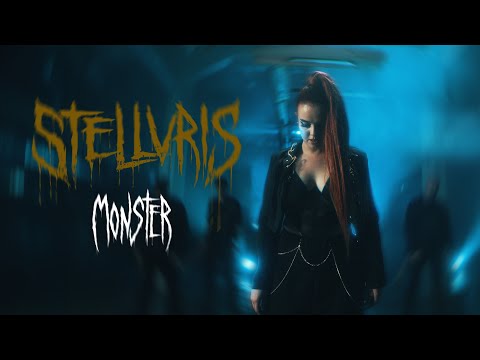
After exploring darker themes in their previous releases, STELLVRIS returns with the EP Shatter and Bloom, a record that balances weight and light, chaos and hope. The title reflects both destruction and rebirth, marking a new chapter for the band where heavy metal becomes a vehicle to tackle vulnerability, toxic relationships, societal aggression, and the challenges of the digital world, without losing the sonic intensity their fans know and love.
By Sandra Pinto
In this interview, we discuss the creative process behind the EP, their collaboration with producer Christoph Wieczorek, the bold choice to reinterpret Nicki Minaj’s Starships, and how each track draws from both personal and collective experiences. STELLVRIS also share how Shatter and Bloom became a cathartic, transformative project turning raw emotions into music that encourages listeners to feel, process, and ultimately find hope.
Shatter and Bloom feels like both a statement and a transformation. What does this title represent for you as a band?
Exactly – it’s both. For me, the title mainly represents transformation. After a darker EP and album, we’re coming back with something that carries a little spark of hope. That’s also why the sunflower became the symbol on the cover – it reflects that sense of light growing out of something heavy, of finding color again after a storm.
The EP explores destruction and rebirth — was there a specific moment or experience that inspired that theme?
Throughout the band’s existence, we’ve gone through different phases, just like in personal life. There was a time when I was starting to lose faith – questioning whether what we were doing still made sense and whether there were even people around me I could continue building this band with. And then a few things happened that gave me hope again. I began to see that small light at the end of the tunnel, and this EP became a way of capturing that feeling – the belief that something new and meaningful could still grow out of the chaos.
How does Shatter and Bloom differ from your earlier work in terms of sound and message?
Sonically, Shatter & Bloom feels brighter than our previous work. The lyrics touch on things I hadn’t really written about before – toxic relationships, the rising aggression in society, and people who are adults on the outside but still children inside, unable to live in the real world because they only exist online. There is also song about those who constantly talk about changing the world but never take a single step, never leave their comfort zone.
That shift just came naturally – it reflects where I am now and how my perspective has evolved. And on top of that, we stepped out of our usual path and added a metal cover of Nicki Minaj’s Starships, which was a fun way to show a different side of STELLVRIS.
The production by Christoph Wieczorek gives the record both power and polish. How did that collaboration come about, and what did he bring to the process?
Working with Christoph was an amazing experience. He brought so many great ideas into our music, along with a powerful, polished production and an incredible sound. The whole studio process felt very natural and inspiring – intense when it needed to be, but also genuinely enjoyable. He really understood what we were aiming for and helped us elevate the songs without taking away their identity.
The title track is a strong emotional anthem. What message did you want to convey through it?
The main message was about not letting yourself be dragged down by people who only talk but never act. It’s about refusing to become bitter because of them and choosing to “bloom” despite all the bullshit around you – to stay strong, keep going, and not lose yourself along the way.
Each song tackles a different side of struggle — from toxic relationships to societal aggression. Were these drawn from personal experiences?Yes, very much so. The song about a toxic relationship was inspired by an experience within the band – a relationship between members that became really unhealthy and draining. It was a difficult period, and I’m honestly relieved that it’s no longer part of my life. I wrote those lyrics for anyone who has been through something similar, or is going through it right now – to give them the courage to walk away and not feel guilty for choosing themselves.
The theme of societal aggression came from a different place. A strong impulse was the shooting at Charles University in Prague – that event shook me deeply and made me reflect on how much anger and frustration is building up in society. The series Adolescence also influenced me a lot.
“Silence After Violence” sounds like a reflection on the world’s growing anger. What sparked that song?
The spark behind that song was the same feeling I mentioned before – the shooting at Charles University in Prague and the series Adolescence. Both of those hit me incredibly hard. They made me think about how much unspoken anger is building up inside people and how fragile the line is between silence and violence. I wanted the song to capture that uncomfortable moment after something terrible happens – when everything goes quiet, but nothing is really healed. It’s about trying to understand where all that rage comes from and how easily it can explode if we don’t start listening to each other.
“Monster” feels both vulnerable and empowering. How did that track come together emotionally and musically?
A lot of the emotional background of Monster is connected to what I mentioned earlier – the experience of dealing with a toxic dynamic and finding the strength to step away from it. Musically, we wanted the song to mirror that journey: starting from something fragile and tense, and gradually growing into something powerful and liberating. It’s a very personal track for me. Writing it felt almost like taking back control – admitting vulnerability, but at the same time realizing that you don’t have to stay small just to fit into someone else’s chaos. That contrast between weakness and strength became the core of both the lyrics and the sound.
“Time’s Up” addresses our digital addictions and detachment from reality, do you think metal has a special power to confront those issues?
I think metal is one of the few genres that can truly go deep into the soul. Because of that, it has a unique ability to speak about heavy and uncomfortable topics in a way that feels honest rather than superficial. Metal has always been a space where people confront their fears, anger, and pain instead of hiding them, and that makes it a powerful tool for talking about things like digital addiction or detachment from reality. It doesn’t sugarcoat anything – it faces those issues head-on and turns them into something people can relate to and release through the music.
“Starships” is such an unexpected cover choice! Why did you decide to reimagine a Nicki Minaj hit and how did you make it fit your sound?We wanted to do something unexpected and a little playful. Starships is such an iconic pop song that almost everyone knows, and turning it into a heavy, modern metal track felt like a fun challenge. We like the contrast between the bright, carefree original and the darker, more intense energy of our sound. At the same time, it wasn’t just about doing a “random cover.” We looked for a way to keep the catchy spirit of the song while giving it the STELLVRIS attitude – heavier guitars, bigger drums, and a mix of clean vocals and screams. It became a bridge between worlds: something nostalgic for people who grew up with the original, but still authentic to who we are as a band.
You formed in 2019 after what started as a jam session. Did you ever imagine things would grow this fast?
I hoped for it. From the very beginning, I had this feeling that what we were creating could grow into something bigger. And I still hope that the momentum will continue – that one day we’ll be able to focus only on music and live from it. That would honestly be the dream.
STELLVRIS have become known for their mix of heaviness and melody. How do you maintain that balance without losing emotional depth?Thank you. The music always comes from us in a very natural way. My lyrics are full of emotion, but also of anger, aggression, and frustration about the topics I write about. That mixture is what creates the balance – the melody carries the feelings, while the heaviness gives them weight and honesty. There’s also a sense of liberation in saying those things out loud. Turning pain or frustration into music makes it real, but at the same time it sets you free, and I think that contrast is what keeps the emotional depth alive.
The Prague metal scene has been thriving. How has being based there shaped your sound and identity?
Prague is a very specific place to grow as a band. Like in any scene, you meet both sides – there can be a lot of criticism and negativity, but at the same time there are amazing, supportive people who genuinely want to see new bands succeed. That contrast has definitely shaped us. Being based here taught us to stay true to ourselves and not rely on outside validation. The city has a strong artistic energy and a diverse metal community, and even if the path isn’t always easy, it pushes you to work harder and find your own identity rather than trying to fit into someone else’s expectations.
Since your debut, what’s the biggest lesson you’ve learned as a modern metal band building your name in the digital era?
That it’s damn hard. These days you almost have to be more of a digital creator than a “live” musician, and that can be exhausting. You don’t just write songs anymore – you create content, tell stories, fight algorithms, and try to stay visible in an endless online space. But it also has its advantages. If things click, your music can reach the whole world much faster than ever before. So it’s a strange balance – challenging and overwhelming at times, but also full of opportunities we wouldn’t have had in any other era.
The EP feels very cathartic. Was writing it a healing process for you?
Yes, it really was. Writing this EP helped me understand a lot of things and come to terms with them. Putting those emotions into songs gave me space to process everything instead of carrying it inside, and in that way it became a kind of healing journey.
When creating songs this emotionally charged, how do you protect your mental and emotional energy as artists?
For me, concerts are a form of meditation. I also go to the gym and practice actual meditation to keep my mind grounded. When I feel like it’s getting too much and it could start affecting my mental health, I disconnect from the online world and take time to recharge. Spending time with my dog Scarlett helps a lot too – she reminds me to slow down, be present, and focus on simple, real things outside of music and the internet.
Is there a lyric or line on Shatter and Bloom that you’re especially proud of, one that captures what the record is all about?
Probably the chorus. For me, it sums up the whole song in its essence. It carries the core emotion and message of the record – everything the verses are building toward is captured in those few lines.
How do you hope listeners will feel after hearing this EP from start to finish?
I hope they’ll feel understood first of all – like someone put into words the things they might be afraid to say out loud. From start to finish, the EP moves through anger, pain, and confusion, but it doesn’t stay there. I’d love for listeners to finish it with a sense of relief, maybe even a little spark of hope, knowing that it’s possible to shatter something broken and still bloom afterward. If someone feels a bit stronger, a bit less alone, or more ready to walk away from what hurts them, then the record has done exactly what it was meant to do.
The EP premieres alongside a new music video for “Shatter and Bloom.” What story or emotion were you aiming to visualize there?
We wanted it to feel a bit crazy – full of movement, colors, and life, and definitely outside rather than locked in a dark room. We filmed it in London with Loki Films, and the whole idea was to capture the spark of hope that this song represents. The visuals were meant to reflect that contrast: energy after chaos, light breaking through something heavy. It’s not a perfectly polished fairytale – more like real life in motion, messy but alive, just like the message of Shatter & Bloom. Loki Films really helped translate that feeling into images and gave the video its raw, vibrant atmosphere.
What can fans expect from your live shows now that Shatter and Bloom is out?
Even more energy than before – that’s the main thing. The new songs brought a fresh drive into our live set, and you can really feel that on stage. We want the shows to be intense, emotional, and real, not just something people watch, but something they experience with us. Fans can expect bigger dynamics, stronger connection with the crowd, and moments where it’s heavy as hell but also melodic and uplifting at the same time. Shatter & Bloom was written with live shows in mind, so we’re excited to bring that mix of chaos and hope directly in front of people.
Finally, if you could describe the EP in three words, what would they be?
Shatter – Breathe – Bloom
Photo: Julia Ramm
Bandcamp here
Digital here