


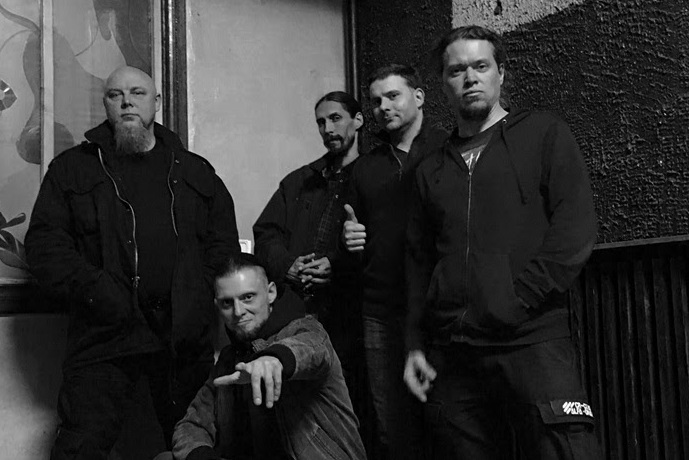
After more than two decades in the metal scene, Russian extreme metal veterans Stalwart return in 2026 with Tempvs Edax Rervm, an album that explores the inexorable power of time, the fading of identity, and the transient nature of all things. Blending death, thrash, groove, and progressive elements, the record takes listeners on an intense, atmospheric journey where crushing riffs, layered melodies, and moments of complex interplay intersect with reflections on the human condition.
By Sandra Pinto
In this interview, Pavel and Leonid discuss the creative process behind the album, from writing remotely during the band’s hiatus to balancing heaviness with atmosphere, and the role of personal and visual experiences in shaping Stalwart’s sound. They explain how themes such as disillusionment, human consciousness, and spiritual decay are translated into riffs, rhythms, and melodic layers, while reflecting on the band’s evolution and enduring presence in the international extreme metal scene.
“Through the Dead Eyes” is described as a commentary on modern spiritual decay. What inspired the lyrical themes of this track?
Pavel: I would say that this is an attempt to comprehend the contradictory and ego-driven nature of human consciousness. In many ways, this track serves as a conceptual summary of the album as a whole.
The song plunges listeners into “a way through desert,” a world of disillusionment. How do you translate such profound themes into musical elements like riffs and rhythm?
Leonid: Good question! But But the answer is that it is actually the other way around – for us music comes first, and then the lyrics translate what the music suggests.
The track combines death, thrash, groove, and progressive metal. How do you balance these different styles while keeping the song cohesive?
Leonid: Well, we were never fans of following any particular music subgenre. Yes, that is the dilemma – you need to make song which sounds like a journey, with its ups and downs, with some unexpected things going on, and at the same time preserve it from falling apart.Our approach to that is to have a strong rod of death/thrash groove riffs on which various elements such as keyboard interludes or clean tone passages can be strung.
After a hiatus starting in 2019, how did the band’s approach to writing and recording change for Tempvs Edax Rervm?
Leonid: That is the long story, but most of the songs on Tempvs Edax Rervm were born back in the day when we were still in the same place geographically. Later on, we were spread around the world and things were getting slow, very slow and almost frozen. But finally we realized we needed to get this done and move forward, and here we are. So generally up until now we didn’t have the experience to make songs from scratch fully remotely – we saved this challenge for the future. As for recording and mixing – yes, many things were done remotely this time, but it is how many bands do it now.
The visualizer for “Through the Dead Eyes” adds a visual dimension to the song. How important are visuals in conveying Stalwart’s atmosphere and themes?
Leonid: We feel like visual representation is something we’ve been missing out on before. Yes, we were always really aimed to deliver album artworks that reveals and translates atmosphere of our music, but video production was a missing link for us. Now, we are trying fill that gap and bring up some imagery which would work well together with our music. While we are still looking for ourselves on that I think we could find something really complementary to Stalwart’s sound.
The album title Tempvs Edax Rervm deals with the inexorable power of time and fading identity. How do these concepts influence the musical and lyrical direction of the record?
Pavel: Nearly all the values that guide humanity are ultimately stripped of their meaning by death. As long as we cling to them, it’s impossible to become truly free or truly alive.
Working with producers like the Wiesławski brothers in the past has defined part of your sound. Who did you collaborate with on this album, and how did that shape the outcome?
Leonid: It was an absolutely amazing experience to work with Wojtek and Slawek who had recorded many albums considered now a metal classic – good old Decapitated records, almost all Vader records for past couple of decades, Behemoth and many others. Being in studio with them totally changed our understanding about album recording process – their scrupulous, meticulous yet very creative approach left a big impression on us. We recorded four albums with them – Abyss Ahead, Annihilation Begins, Manifest of Refusal and Tectonic.
But this time things were different – due to several factors we decided to do everything ourselves, from the beginning to the end, including production, tracking, final mix and master. Yes, that was not easy, absolutely! Especially mixing and mastering are hard – sometimes you feel like you’re trapped in the loop when you try to make things better but suddenly realizing that you’re still in the same place. But finally we made it, we are proud of the result and you’ll be able to check it out very soon!
Stalwart has shared stages with Behemoth, Kataklysm, Amon Amarth, and many others. How has performing with these bands influenced your live energy and songwriting?
Leonid: Oh yeah, that was a big part. When we were starting out, there were almost no international metal shows, only local scene. It is hard to imagine nowadays, but it was that way. Of course, everyone remembers that gigantic Tushino show with Metallica, Pantera and AC/DC in 1991, but it was long before we started, and soon after that epic event metal in Russia fell into complete underground. We really grew up never seeing “real” bands live, until they started coming in late 90s – Children of Bodom in 1998 were a huge impression, and Vader and Behemoth in early 2000s. Of cause it was eye opening and incredibly inspiring to see how “real” bands play and perform on stage, and to feel the the energy they transmit, and we were lucky to join many shows as openers.
Atmospheric layers are a key part of your sound. How do you decide when to add ambiance versus when to push the heaviness forward?
Leonid: We started in the late 1990s basically as a thrash metal band. That time wasn’t easy for metal, at least for traditional metal, if you will – nu metal was at its peak, and the thrash and death revival waves occurred later, in the 2000s were still way ahead. Very quickly we decided we need to develop our sound beyond just thrash metal boundaries, and one of the ideas was to introduce a little bit of keyboards. I won’t be shy to admit that – one of inspirations was Dimmu Borgir – their “Spiritual Black Dimension” really blew me away, especially use of keyboards, which gave music intrigue and depth. Since that, keyboards and atmosphere became an integral part of Stalwart’s sound, but we were never losing groove and riffs, trying to get the best of both worlds. I feel like – when song is composed on different instruments – some parts on guitars and some on keyboards – it brings additional dimensions, and song is starting to be not just a a collection of riffs, but something like a journey.
The track critiques the futility of human endeavor and routine. Are these reflections personal, societal, or both?
Pavel: Of course, all the transformations of consciousness described on the album were experienced and understood personally. But the conceptual questions we face individually often echo ideas that have already been explored in literature. That’s why the album also draws on myths—stories that haven’t lost their relevance over thousands of years and still allow us to look into them as if into a mirror.
How does the creative process differ when composing songs with complex rhythms and progressive elements versus more straightforward death or thrash passages?
Leonid: One important thing I already noticed – different parts of the song on different instruments really produces something unique. The truth is, many factors defines the way one composes the music, but instrument is definitely one of them, and I can say that pieces I write on guitar is different from what I write on keyboards – I just can’t make them similar even if I want to! So, for more straightforward bangers it is all about guitar riffs, for sure. And for more complex, proggy stuff combines guitar riffs, keyboard passages and atmospheric interludes – it could be different pieces of the same song or different layers of the same part!
With the release of Tempvs Edax Rervm early 2026, what do you hope fans experience emotionally and sonically from this new chapter of Stalwart?
Leonid: This time we were trying to find a good balance – not making songs which are verse-chorus-verse-chorus-bridge-chorus structure, but also not chasing complexity for the sake of complexity. On some our albums we made before we tried to push ourselves forward and uncover new dimensions, but this time we just were natural and concentrated on making good songs. The album sounds like a journey with unexpected turns, but at the same time it does not loose heaviness, groove, and catchy riffs.
Looking back over more than two decades of your career, how has Stalwart evolved in terms of musical ambition, lyrical themes, and identity as a band?
Leonid: Well, the first piece of news – we survived! I think it is pretty big by itself. Just kidding but not really. We’ve been a little different with each album but we were not losing the main direction, the essence of our sound. And we keep going!
