


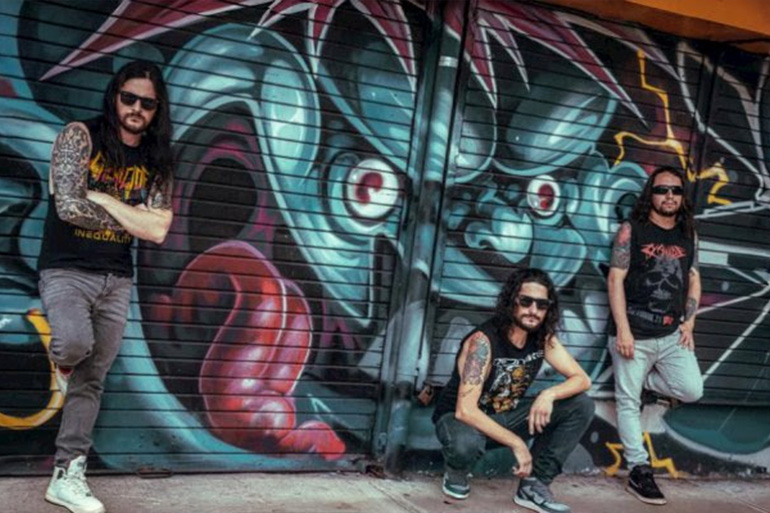
HÖWLER returns more aggressive and direct than ever with their new album, Beyond Mortal Control. In this interview, we talk with Fucas — bassist, vocalist, and frontman of the band — about the inspiration behind tracks like The 9 to 5 Trap, the impact of the lineup change to a trio, and the band’s evolution within thrash metal.
By Sandra Pinto
We also discuss the DIY composition process, the raw energy of their music videos, and the experience of sharing the stage with major international metal acts. Between fast riffs, thoughtful lyrics, and old-school intensity, this conversation reveals the most honest and aggressive essence of HÖWLER.
“The 9 to 5 Trap” tackles the pressure and routine of modern life. What inspired you to write this song?
The inspiration comes from the ideas of Pepe Mujica. He once said that when you work for money, what you are really giving away is your lifetime. Money comes and goes, but time never comes back, and little by little your life slips away. In many ways it reminds me of the concept behind “Another Brick in the Wall” by Pink Floyd — the same routine repeating every day. It’s basically modern slavery.
Do you feel this theme is something many metal fans can relate to today?
Absolutely. It’s the reality for most people in the world. The majority of the population lives within the same weekly cycle of work that just keeps repeating endlessly.
Musically, what sets “The 9 to 5 Trap” apart from your previous songs?
The biggest difference is that we used to be a five-piece band and now we’re a trio. Höwler was always meant to be a thrash metal band in the vein of the classics, but on the previous four albums there were some heavy metal influences that sometimes pulled us away from a more direct thrash approach. Now the songwriting is much more aggressive and focused on old-school thrash.
The single has a very raw and aggressive energy. Was that a conscious choice to mark this new phase of the band?
That was actually the original idea since the band started in 2009. After a big shake-up in the lineup, we finally managed to achieve that vision.
What was the songwriting and recording process like for this track?
This was actually the first song I wrote for the album. I was very inspired by bands like Slayer, Sepultura and Pantera, so I just sat down and started writing riffs that felt right. We are a DIY band, so I showed Dogor how the riffs went, explained the drum ideas and details to Ringo, and then I produced, recorded and edited everything in our small home studio. After that, my friend Martin Furia, guitarist of Destruction, handled the mixing and mastering.
The music video conveys a very intense atmosphere. What was the concept behind it?
In many ways the whole album deals with the idea of control. The real puppeteer controlling us is the central nervous system — the thing that truly moves not only our bodies but also the world around us. The video shows a recurring work nightmare. We appear inside an office with cables coming out of our necks, and those cables are controlled by the real puppeteer.
How was the experience of filming the video, and what message did you want to visually convey to the audience?
Filming the video was actually a lot of fun and we had a great time doing it. The message is that even if there’s no easy way out of this endless work cycle, we should still try to deal with it in the best possible way — like us playing music inside our van.
“Beyond Mortal Control” has been described as darker and more aggressive. What led the band in that direction?
This is the direction we always wanted to take, but for different reasons we couldn’t fully express it before because of the influence of former members. Now we’re like Kid Majin Buu when he reached his purest form.
In what ways does this album represent an evolution from your previous releases?
Because now you’re hearing the most honest version of Höwler. This is the most honest and least pretentious record we’ve ever made.
Is there any track on the album that you consider particularly special or different?
Each song shows a different face of the true essence of Höwler. They all have their own identity but share common elements. At the end of the album there’s a cover of “Shylock” by the Australian 70s band Buffalo from their album Volcanic Rock. It’s a song we used to listen to as teenagers while drinking beers and hanging out.
What can you tell us about the writing and recording process of this record?
Most of the album was written by me, both music and lyrics. There are also a couple of riffs from Dogor and some ideas from Ringo, but the passion of all three of us is in the record. The production, recording and editing were done in my home studio, and we had a great time working on these songs.
The band is now operating as a three-piece. How has that change influenced your sound and creative dynamic?
The creative dynamic improved a lot because the ideas I had when I first formed the band are now being expressed in a much clearer way. The sound is more refined, more direct and more aggressive, while still keeping the technical aspects from previous albums. The creative flow is stronger now and there’s much more cohesion between us.
Since forming in 2009, how do you see HÖWLER’s evolution within the thrash metal scene?
Like I said before, Höwler evolved in a way similar to Majin Buu — now we are the purest version, but also the most evil one. That darkness that always existed is now completely visible. Within the thrash scene we’ve been growing since the first album, and with this record we hope to grow even more and reach a stronger level of consolidation.
You’ve shared the stage with bands like D.R.I., Whiplash, Angelus Apatrida and Destruction. Are there any memorable moments from those shows?
All of those shows have been intense and crazy. One memorable moment was when Angelus Apatrida contacted us to play a show on a Sunday while traveling from Mexico to Colombia with a stop in Costa Rica. We organized a kind of “ghost show” in a small bar with a ticket price of about two dollars. The place was completely packed with metalheads and it was absolute madness.
How would you describe the current thrash metal scene in Central America?
There are many great bands. Central America has a lot of thrash rage and many lethal bands that deserve more support. Bands like Stryke Master, Chemicide, Höwler, Célula, Dekonstructor and Poison The Preacher, among many others.
What can fans expect when “Beyond Mortal Control” is released on May 8?
Aggression, fast riffs, plenty of chug-chug, meaningful lyrical content and musical diversity. Straight to the jugular.
Are there plans for international touring after the album release?
Right now we’re starting a Latin American tour with several dates in Costa Rica, as well as shows in Mexico, El Salvador and possibly Colombia. We would love to tour Europe as well — and we believe it’s very important — but at the moment the main limitation is simply the financial side. Hopefully we’ll make it happen someday.
Would you like to play in Portugal or other parts of Europe in the future?
According to our digital platform statistics, many of our listeners are actually in Europe. So of course we would love to play there. Touring Europe has always been one of the goals we’ve tried to achieve since the band started.
If you had to describe this new chapter of HÖWLER in three words, what would they be?
Honest, direct and metal.
Apple Music: Apple Music
Facebook: Facebook
Spotify: Spotify
YouTube: YouTube
Bandcamp: Bandcamp